
Chihuahuas are very small dogs with delicate airways, so even minor irritants can bother them a lot. If your Chihuahua starts making honking noises, gagging, or coughing, it can be worrying, especially if it happens suddenly or keeps happening. Sometimes a little cough or gag is just your dog clearing its throat. But if it happens often or seems severe, it could be a sign of something more serious, like a collapsing trachea, a respiratory infection, or heart problems. Since these little dogs can’t tell us how they feel, it’s important to watch them closely for any warning signs.
Gagging and coughing are different, but both can signal issues. Gagging usually happens when your Chihuahua is trying to clear its throat and may include retching. Coughing is a forceful expulsion of air from the lungs. Both can be caused by things like hair, dust, small objects, or allergies. Paying attention to how often it happens and what triggers it can help you spot problems early and get your dog the care it needs.
In some cases, these symptoms may also be linked to conditions like infections, airway disorders, or even heart-related issues. Understanding what is normal and what is not can help you take the right action at the right time.
Understanding the Difference Between Coughing and Gagging
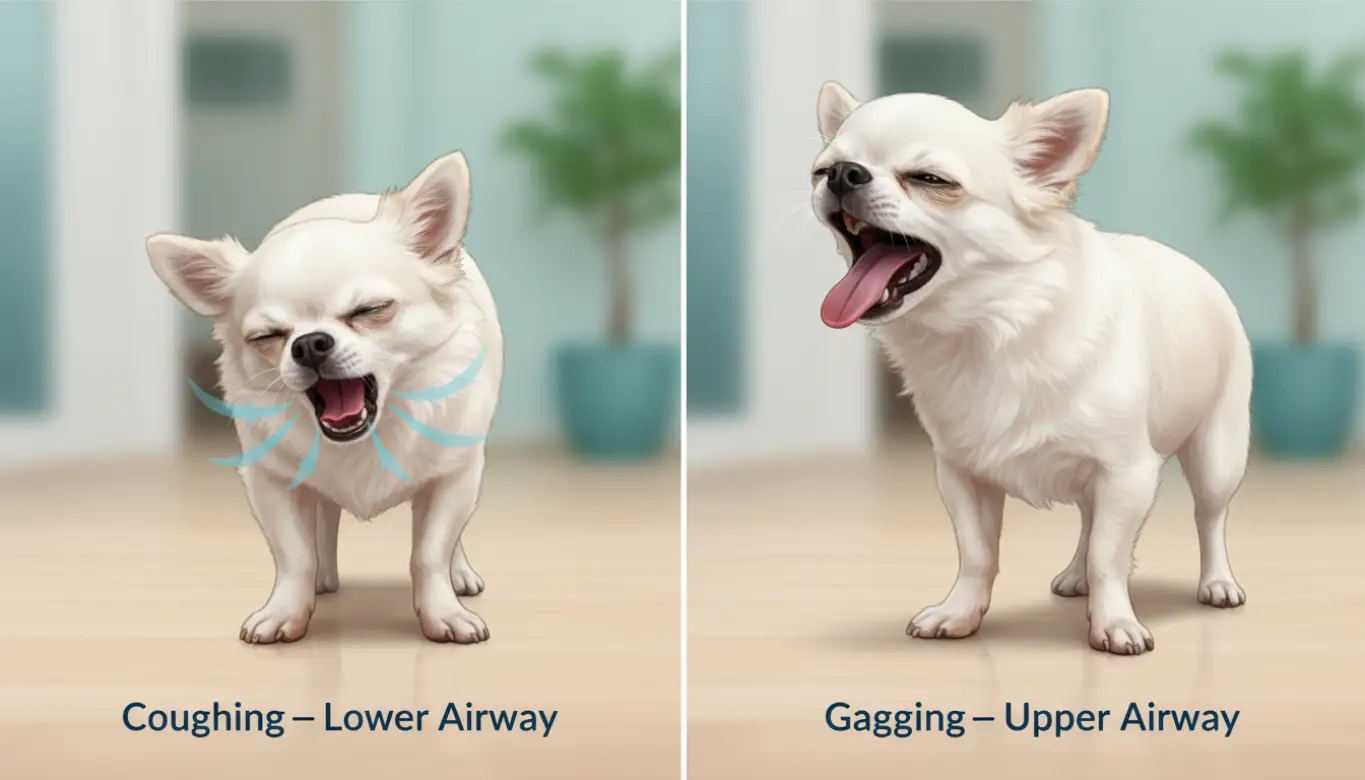
Coughing and gagging are both reflexes designed to clear the airways, but they differ in purpose and sound.
Coughing
Coughing is your Chihuahua’s way of clearing the lower airways or lungs of mucus, irritants, or foreign material. It usually sounds harsh, honking, or hacking. Coughing can be caused by respiratory infections, heart problems, collapsing trachea, or allergies. Paying attention to when it happens and how it sounds can help you and your vet identify the underlying cause.
Gagging
Gagging happens when the throat or pharynx is irritated or partially blocked. It often produces retching or choking sounds and may sometimes lead to vomiting. Common triggers include hair, dust, small objects, rapid eating, or allergens. Recognizing gagging is important because it usually points to an upper airway issue and helps your vet decide the best care.
Common triggers for gagging include rapid eating, hair, small objects, or allergens irritating the throat. Recognizing the difference can help determine whether the problem lies in the upper or lower airway and guide appropriate veterinary care.
To understand why these symptoms occur, it is important to explore the most common underlying causes.
Common Causes of Coughing in Chihuahuas
Chihuahuas can cough due to a variety of respiratory, cardiac, or infectious conditions. The most common causes include:
Collapsing Trachea
Collapsing trachea is a common condition in Chihuahuas where the airway weakens, causing a honking cough and breathing difficulty.
Respiratory Infections
Chihuahuas are prone to infections caused by bacteria, viruses, fungi, or parasites, leading to conditions like bronchitis or pneumonia. Kennel cough and canine influenza are common infectious causes. Symptoms may include nasal discharge, fever, and lethargy. Treatment usually involves supportive care, antibiotics, and rest.
Heart Disease
Small breeds can develop mitral valve disease or congestive heart failure, causing fluid accumulation in the lungs. This can lead to chronic coughing, difficulty breathing, and exercise intolerance. Veterinary treatment often includes medications to support heart function, reduce fluid buildup, and control blood pressure.
Heartworm Disease
Parasitic worms transmitted via mosquito bites can mature in the heart and lungs, causing inflammation and respiratory distress. Heartworm prevention medications are strongly recommended, as treatment can be complex and costly.
Chronic Bronchitis
Long-term airway inflammation can cause a persistent dry cough, often worsened by exercise or excitement. Inhaled medications or anti-inflammatories may be prescribed to manage symptoms.
Allergies
Environmental allergens such as pollen, dust, mold, or household irritants can trigger coughing. Symptoms may also include sneezing, watery eyes, itchy skin, and nasal discharge. Identifying triggers and using appropriate medications can help manage allergic reactions.
Lung Disease or Cancer
Tumors in the lungs or surrounding tissues may interfere with normal breathing and trigger persistent coughing. Treatment varies based on the type and stage of disease and may include surgery, chemotherapy, or radiation.
Gagging in Chihuahuas
Gagging in Chihuahuas occurs when the dog is trying to clear the throat or mouth of something that is irritating or obstructing it. Unlike coughing, gagging usually involves retching sounds and may sometimes lead to vomiting. It can be triggered by small foreign objects, rapid eating, hair, or irritation in the pharynx.
Common Causes of Gagging in Chihuahuas
Foreign objects such as food fragments, toys, or plant material can become lodged in the throat, triggering gagging as the body attempts to expel them.
Rapid eating or drinking can stimulate the gag reflex, especially in small dogs like Chihuahuas.
Throat irritation caused by hair, dust, pollen, or other environmental allergens may lead to repeated gagging episodes.
In some cases, underlying medical conditions such as collapsing trachea or laryngeal issues may also contribute to gagging.
Gagging is often a protective response, but repeated or severe episodes can increase the risk of aspiration, secondary infections, or more serious health complications. Timely veterinary evaluation ensures proper diagnosis and treatment.
Gagging in some dogs may also be linked to a condition called reverse sneezing, where the dog makes repeated snorting or choking-like sounds while trying to inhale. This can be triggered by excitement, sudden temperature changes, or irritants like dust and pollen. While it may look alarming, it is usually not dangerous unless it becomes frequent or prolonged.
Symptoms That Indicate a Serious Problem
Occasional coughing or gagging may be harmless, but certain signs indicate urgent veterinary care is needed:
- Persistent or severe coughing/gagging
- Difficulty breathing or noisy respiration
- Lethargy or weakness
- Loss of appetite
- Blue or pale gums
- Vomiting associated with gagging
Some dogs may also produce mucus from the nose or eyes during coughing or gagging episodes. In certain cases, repeated gagging may lead to occasional vomiting due to throat irritation.
How Veterinarians Diagnose Coughing and Gagging
A thorough diagnostic evaluation is required to determine the underlying cause. Veterinarians may perform:
- Review of medical history and environment
- Physical examination
- Blood tests, chest X-rays, and ultrasound
- Advanced tests such as endoscopy, bronchoscopy, or echocardiography for complex cases
Accurate diagnosis ensures that treatment targets the root cause rather than just masking symptoms.
Treatment Options for Chihuahuas
Treatment depends on whether the issue is related to coughing, gagging, or both. The right treatment depends on the root cause and can include:
- Antibiotics for bacterial infections
- Anti-inflammatory medications for airway irritation
- Airway dilators to improve breathing
- Cough suppressants under veterinary guidance
- Heart medications for cardiac-related coughing
- Surgical procedures for foreign objects or collapsing trachea
Owners should never give human cough medications to dogs without veterinary approval, as many can be toxic.In mild cases, especially when caused by temporary irritation, rest, hydration, and a calm environment can help reduce gagging episodes. However, persistent symptoms may require medications such as anti-inflammatories or cough suppressants prescribed by a veterinarian.
Preventive Measures
While not all causes can be prevented, several steps reduce the risk of coughing and gagging in Chihuahuas:
- Keep vaccinations up to date and use heartworm prevention
- Avoid smoke, dust, and environmental irritants
- Use a harness instead of a collar to reduce airway pressure
- Maintain a healthy weight and provide a balanced diet
- Schedule regular veterinary checkups
Preventive care is essential to protect the respiratory health of small breeds like Chihuahuas.Vaccination against respiratory infections like kennel cough can help reduce the risk of airway-related symptoms. Preventing exposure to dust, smoke, and strong odors is also important for dogs with sensitive airways.
Frequently Asked Questions
Why does my Chihuahua cough like something is stuck in his throat?
This type of cough often indicates a collapsing trachea, which is common in small toy breeds like Chihuahuas. Sometimes, inhaled foreign objects or respiratory infections can produce a similar honking or gagging sound. Owners may notice coughing worsening during excitement or exercise. Veterinary evaluation is essential to identify the exact cause and provide appropriate treatment.
Is coughing or gagging common in Chihuahuas?
Occasional mild coughing or gagging can happen in any dog and may not indicate a serious problem. However, Chihuahuas are prone to respiratory issues due to their small size and delicate airways. Persistent or worsening symptoms should always be checked by a veterinarian. Early diagnosis helps prevent complications from underlying conditions.
Can allergies cause gagging or coughing?
Yes, environmental allergens like pollen, dust, mold, or household irritants can trigger inflammation in a Chihuahua’s respiratory system. This may result in persistent coughing, gagging, or throat irritation. Some dogs may also show watery eyes, sneezing, or itchy skin. Allergy testing and medications can help control these reactions.
Could my Chihuahua have a kennel cough?
Chihuahuas exposed to infected dogs in shelters, boarding facilities, or social environments can develop kennel cough. Symptoms typically include a dry, hacking cough, sneezing, mild lethargy, and nasal discharge. Most cases resolve with supportive care, rest, and sometimes antibiotics. Vaccination and avoiding exposure reduce the risk of infection.
Can heart disease cause coughing or gagging?
Yes, heart conditions such as mitral valve disease or congestive heart failure can lead to fluid accumulation in the lungs. This often results in chronic coughing, gagging, and difficulty breathing. Medications prescribed by a veterinarian help manage symptoms and improve heart function. Regular checkups are crucial to prevent worsening of cardiac conditions.
How can I prevent collapsing trachea or gagging episodes?
Prevention focuses on minimizing stress on the trachea and airway. Avoid excessive collar pressure, maintain a healthy weight, reduce exposure to smoke and environmental irritants, and use a harness instead of a neck collar. Regular veterinary checkups help detect early airway weakness. Healthy lifestyle management also lowers the risk of gagging episodes.
What home care can help a coughing or gagging Chihuahua?
Keep your Chihuahua’s environment clean, dust-free, and well-humidified to reduce airway irritation. Avoid using over-the-counter human cough medications, which can be harmful. Monitor your dog closely for worsening symptoms or increased frequency of coughing and gagging. Prompt veterinary intervention is necessary if symptoms persist or escalate.