Dogs have been companions to humans for thousands of years, often sharing our homes and occasionally, our food. While many traditional foods are safe, some everyday items we eat without a second thought can be surprisingly harmful to dogs. From chocolate to grapes, onions to xylitol, even small amounts of certain ingredients can trigger vomiting, digestive upset, or serious organ damage.
Responsible pet ownership means knowing which foods are safe, which should be given in moderation, and which are outright toxic. This guide provides evidence-based advice on the most common dietary risks for dogs, healthy alternatives for snacks, and the exact steps to take if your dog accidentally eats something dangerous.
What Foods Are Toxic to Dogs?
Dogs can be very curious and often try to eat things they shouldn’t. Some common human foods contain compounds that are toxic or dangerous to dogs, even in small amounts.
- Chocolate
- Grapes
- Raisins
- Onions
- Garlic
- Macadamia nuts
- Alcohol
- Caffeine
- Coffee beans
- Xylitol (artificial sweetener)
- Raw bread dough
- Avocado
- Cherries
- Green or unripe tomatoes
- Raw potatoes
- Rhubarb leaves
- Wild mushrooms
- Fat trimmings
- Raw fatty meat
- Salty foods
- Sugary foods
- Candy
- Apricot pits
- Peach pits
- Plum pits
- Cooked bones
These foods can cause a wide range of problems in dogs, including vomiting, diarrhea, weakness, tremors, seizures, or even organ failure. Because dogs digest food differently than humans, even small amounts of these items can be harmful. Always keep them out of reach and seek veterinary care immediately if a dog consumes any of these toxic foods.
Why Human Foods Can Be Dangerous for Dogs
Dogs digest food differently than humans. Their metabolism and body chemistry make them more sensitive to certain compounds found in everyday foods.
Different Metabolism
Some substances that are harmless to humans remain in a dog’s system longer. For example, chocolate contains the stimulant theobromine, which dogs cannot process efficiently.
Smaller Body Size
Because dogs typically weigh much less than humans, even small quantities of toxic food can have a strong effect on their body.
Sensitive Organs
Certain foods target specific organs in dogs:
- Grapes may damage the kidneys
- Onions can harm red blood cells
- Chocolate affects the heart and nervous system
For this reason, it is safer to feed dogs foods that are known to be pet-safe.
Fruits Dogs Can Safely Eat
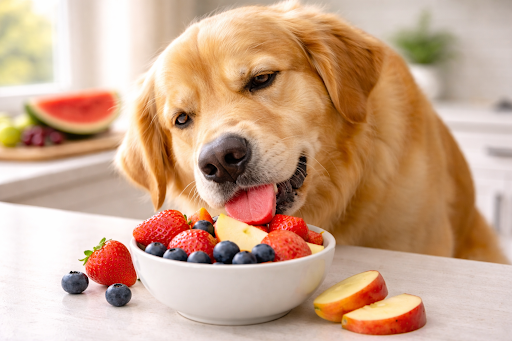
Many fruits provide vitamins, antioxidants, and hydration that can benefit dogs when offered in moderation. Fruits should always be served without seeds, pits, or thick skins.
Safe fruits for dogs include:
- Apples (without seeds)
- Bananas
- Blueberries
- Strawberries
- Watermelon (seedless)
- Mango (pit removed)
- Pineapple
- Cantaloupe
- Honeydew melon
- Cranberries
- Raspberries
- Pears (without seeds)
Because fruits contain natural sugar, they should only be given as occasional treats rather than daily meals.
Apples for Dogs
Apples are a crunchy and refreshing snack that many dogs enjoy. They provide fiber and vitamin C while being relatively low in calories.
However, apple seeds contain compounds that may be harmful if eaten in large amounts, so dogs should only be given seedless apple slices.
Blueberries for Dogs
Blueberries are widely considered one of the healthiest fruits dogs can eat. They contain antioxidants that support the immune system and may help protect cells from damage.
Because blueberries are small and easy to eat, many dog owners use them as healthy training treats.
Watermelon for Dogs
Watermelon is a hydrating fruit that can help dogs stay cool during warm weather. It contains vitamins A, B6, and C, along with a high water content. Seeds and the thick outer rind should be removed before feeding watermelon to dogs.
Vegetables Dogs Can Eat
Vegetables are generally lower in sugar than fruits and provide a variety of essential nutrients, including vitamins, minerals, and dietary fiber, making them a healthy and nutritious snack option that can support your dog’s digestive health, weight management, and overall wellbeing. Dog-safe vegetables include:
- Carrots
- Cucumbers
- Green beans
- Pumpkin
- Sweet potatoes
- Peas
- Zucchini
- Lettuce
- Spinach (occasionally)
- Broccoli (small amounts)
These vegetables contain fiber, vitamins, and minerals that can support overall health.
Carrots for Dogs
Carrots are one of the most popular healthy treats for dogs. They are crunchy, low in calories, and rich in beta-carotene, which supports eye health. Chewing on raw carrots may also help reduce plaque buildup on teeth.
Pumpkin for Dogs
Plain pumpkin is commonly recommended by veterinarians for digestive health. Its fiber content can help regulate bowel movements and improve mild stomach issues.
Only plain pumpkin puree should be used. Pumpkin pie filling often contains sugar and spices that are not suitable for dogs.
Foods Dogs Can Eat in Moderation
Some foods are not toxic but should still be limited because they are high in fat, sugar, or difficult for dogs to digest. Examples include:
- Peanuts (unsalted and plain)
- Peanut butter (without xylitol)
- Cheese
- Yogurt
- Cooked eggs
- Plain rice
- Oatmeal
- Plain cooked chicken
These foods can be offered occasionally as treats but should not replace a balanced dog diet.
Dairy Products and Dogs
Some dogs have difficulty digesting lactose, the natural sugar found in dairy products. Because many dogs lack sufficient amounts of the enzyme needed to break down lactose, foods such as milk or cheese can sometimes cause digestive discomfort. When a lactose-sensitive dog consumes dairy, it may experience symptoms like gas, bloating, or diarrhea as the body struggles to process the sugar. For this reason, dairy products should only be offered in small quantities and monitored carefully to ensure they do not cause digestive upset.
Toxic Foods Dogs Should Never Eat
Certain foods contain compounds that are clearly toxic to dogs and should always be avoided. Highly toxic foods include:
- Chocolate
- Grapes
- Raisins
- Onions
- Garlic
- Macadamia nuts
- Alcohol
- Caffeine
- Xylitol (artificial sweetener)
- Raw bread dough
- Moldy foods
These foods may cause symptoms ranging from vomiting and weakness to serious poisoning.
Why Grapes Are Dangerous for Dogs
Grapes and raisins can cause sudden kidney failure in some dogs. Even small amounts may lead to vomiting, weakness, or loss of appetite. Because the exact toxic compound is still unknown, veterinarians recommend avoiding grapes entirely.
Chocolate Toxicity in Dogs
Chocolate contains theobromine and caffeine, both of which can overstimulate a dog’s nervous system. Symptoms of chocolate poisoning may include:
- Vomiting
- Rapid heart rate
- Restlessness
- Tremors
- Seizures
Dark chocolate and baking chocolate contain the highest levels of theobromine and are therefore the most dangerous.
Onions and Garlic
Onions and garlic contain compounds that can damage a dog’s red blood cells. This may lead to anemia if consumed in large quantities.
Symptoms may include weakness, fatigue, pale gums, and breathing difficulties.
Macadamia Nuts and Dogs
Macadamia nuts are highly toxic to dogs and may cause symptoms such as muscle weakness, vomiting, tremors, and difficulty walking. Even small quantities can trigger these reactions.
Xylitol Sweetener Poisoning
Xylitol is an artificial sweetener commonly found in sugar-free gum, candy, and baked goods.In dogs, xylitol causes a rapid release of insulin, leading to dangerously low blood sugar levels.
Symptoms may include weakness, seizures, or loss of coordination. Immediate veterinary care is required if a dog consumes xylitol.
Poisonous Plants Dogs May Encounter
While food is the most common source of accidental poisoning in dogs, household and garden plants can also pose serious health risks. Many popular succulents, decorative plants, and common flowers contain compounds that are toxic when ingested. Dogs that chew or swallow these plants may develop vomiting, diarrhea, lethargy, or more severe symptoms depending on the type and amount consumed.
- Aloe Vera
- Sago Palm
- Oleander
- Azalea
- Cyclamen
- Kalanchoe
- Dieffenbachia (Dumb Cane)
- Lilies (certain types like Easter and Tiger lilies)
- Philodendron
- Pothos (Devil’s Ivy)
Even small amounts of some plants, such as sago palms or certain lilies, can cause organ failure or serious poisoning. Keeping toxic plants out of reach, teaching dogs not to chew on foliage, and consulting veterinary guides are essential steps for protecting your pet’s health.
What Happens if a Dog Swallows a Chicken Bone?
Dogs sometimes swallow bones found in leftovers or garbage. Cooked chicken bones are especially dangerous because they can splinter. Possible risks include:
- Choking
- Mouth injuries
- Digestive blockage
- Internal damage
If a dog swallows a chicken bone, owners should monitor their pet closely and contact a veterinarian if symptoms appear.
Signs of Food Poisoning in Dogs
Food poisoning in dogs can present differently depending on the type of substance ingested and the amount. Early recognition of symptoms is crucial to prevent serious complications and ensure timely veterinary care.
- Vomiting
- Diarrhea
- Excessive drooling
- Loss of appetite
- Weakness or lethargy
- Tremors or shaking
- Seizures
Symptoms can appear within a few hours of ingestion or develop gradually over several days. Monitoring your dog closely and contacting a veterinarian at the first sign of these warning signs can make a significant difference in recovery and help prevent severe health issues.
What to Do if Your Dog Eats Something Toxic
If your dog consumes potentially dangerous food, acting quickly can prevent serious health complications. Follow these steps to protect your pet:
- Remove any remaining food or substance immediately.
- Identify exactly what your dog ate, including the amount and type.
- Observe your dog closely for any signs of illness or abnormal behavior.
- Contact a veterinarian as soon as possible for professional advice.
- Follow all veterinary instructions carefully, including whether to bring your dog in for treatment.
- Do not attempt home remedies unless specifically instructed by a veterinary professional.
Quick, decisive action is critical when dealing with toxic food ingestion. Timely veterinary intervention can make the difference between a minor upset and a serious medical emergency.
Dangerous Foods for Dogs
| Food | Main Risk |
| Chocolate | Nervous system poisoning |
| Grapes | Kidney failure |
| Onions | Red blood cell damage |
| Garlic | Anemia risk |
| Macadamia nuts | Muscle weakness |
| Xylitol | Dangerous drop in blood sugar |
Foods Dogs Can Generally Eat
These foods are usually safe for dogs when served in small portions and prepared without added salt, sugar, or seasoning.
| Food | Safe for Dogs? | Notes |
| Apples | Yes | Remove seeds and core |
| Bananas | Yes | High in sugar, give small portions |
| Blueberries | Yes | Rich in antioxidants |
| Strawberries | Yes | Wash and serve fresh |
| Watermelon | Yes | Remove seeds and rind |
| Pineapple | Yes | Fresh pineapple only |
| Mango | Yes | Remove pit and skin |
| Pears | Yes | Remove seeds |
| Carrots | Yes | Great low-calorie snack |
| Cucumbers | Yes | Hydrating and low calorie |
| Green beans | Yes | Serve plain |
| Pumpkin | Yes | Plain pumpkin puree only |
| Sweet potatoes | Yes | Cooked and plain |
| Peas | Yes | Fresh or frozen |
These foods can make healthy treats but should not replace a balanced dog diet.
Foods Dogs Can Eat in Moderation
Some foods are not toxic but should only be given occasionally due to fat content, lactose, or digestive sensitivity.
| Food | Safe for Dogs? | Notes |
| Cheese | Sometimes | Some dogs are lactose intolerant |
| Yogurt | Sometimes | Plain yogurt only |
| Milk | Sometimes | Small amounts only |
| Eggs | Yes (moderate) | Cooked eggs are safest |
| Peanut butter | Sometimes | Must be xylitol-free |
| Oatmeal | Yes (moderate) | Good fiber source |
| Rice | Yes | Helpful for upset stomach |
| Chicken | Yes | Plain cooked chicken |
| Fish | Yes | Cooked and boneless |
| Bread | Sometimes | Plain bread only |
These foods can be occasional treats but should not be a regular part of a dog’s diet.
Foods Dogs Should Never Eat
Some foods are toxic and should always be kept away from dogs.
| Food | Risk |
| Chocolate | Contains theobromine which is toxic |
| Grapes | Can cause kidney failure |
| Raisins | Same toxic effect as grapes |
| Onions | Damage red blood cells |
| Garlic | Can cause anemia in dogs |
| Macadamia nuts | Cause weakness and tremors |
| Alcohol | Severe poisoning risk |
| Caffeine | Overstimulates nervous system |
| Xylitol | Causes dangerous drop in blood sugar |
| Raw bread dough | Expands in stomach |
If a dog eats any of these foods, veterinary advice should be sought immediately.
Foods That May Cause Digestive Upset
Some foods are not immediately toxic but can still cause digestive upset or discomfort in dogs. These items may lead to vomiting, diarrhea, gas, or bloating, so it’s best to feed them only in small amounts or avoid them altogether. Examples include:
- Pistachios
- Almonds
- Spicy foods
- Fried foods
- Salty snacks
- Processed foods
- Fatty leftovers
Dogs have sensitive digestive systems, so it is best to avoid feeding heavily seasoned or processed foods.
Final Thoughts
Food safety plays an important role in protecting a dog’s health. While some human foods can be shared safely, others contain compounds that dogs cannot process properly.By learning which foods are safe, which should be limited, and which are toxic, dog owners can prevent many accidents and keep their pets healthy.
When in doubt, the safest rule is simple: only feed foods that are known to be safe for dogs and avoid sharing human meals that contain unknown ingredients. The American Veterinary Medical Association (AVMA) and other pet health organizations advise keeping potentially harmful foods off a dog’s menu and sharing only those items verified as safe by veterinary experts.
FAQs
What are the most toxic foods for dogs?
Dogs cannot safely process certain human foods. Items like chocolate, grapes, raisins, onions, garlic, macadamia nuts, alcohol, caffeine, and xylitol can cause serious harm. Even small amounts may trigger vomiting, weakness, tremors, or organ failure. Awareness and careful monitoring are essential to keep dogs safe.
Why are grapes and raisins dangerous for dogs?
Grapes and raisins can cause sudden kidney failure in some dogs, and the toxic compound is still unknown. Even a few pieces can lead to vomiting, lethargy, and loss of appetite. Because of the unpredictability, veterinarians strongly advise avoiding grapes entirely.
How much chocolate is toxic for dogs?
Chocolate contains theobromine and caffeine, which dogs metabolize slowly. Dark and baking chocolate have the highest levels, making even small amounts dangerous. Symptoms include restlessness, rapid heart rate, vomiting, tremors, and seizures, requiring immediate veterinary attention.
What happens if a dog eats onions or garlic?
Onions and garlic contain sulfur compounds that can damage a dog’s red blood cells, potentially causing anemia. Signs include weakness, pale gums, fatigue, and difficulty breathing. Even small amounts over time can accumulate and create serious health problems.
Are nuts safe for dogs to eat?
Most nuts are high in fat and difficult for dogs to digest, leading to stomach upset or pancreatitis. Macadamia nuts are especially toxic, causing muscle weakness, tremors, vomiting, and lack of coordination. Non-toxic nuts should still be offered only in very small amounts.
Which fruits are safe for dogs?
Fruits like seedless apples, blueberries, bananas, strawberries, watermelon, and mango are safe when given in moderation. They provide fiber, antioxidants, and hydration but should never replace balanced meals. Always remove seeds, pits, and tough skins before feeding.
Can dogs safely eat vegetables?
Vegetables such as carrots, cucumbers, green beans, pumpkin, and sweet potatoes are healthy for dogs. They provide fiber, vitamins, and minerals that support digestion and overall health. Serve vegetables plain, without salt, butter, or seasoning.
What are the early signs of food poisoning in dogs?
Early signs include vomiting, diarrhea, drooling, and loss of appetite. Severe cases may present tremors, weakness, confusion, or seizures. Quick recognition of symptoms and contacting a veterinarian promptly is key to preventing serious complications.
What should I do if my dog eats toxic food?
Immediately remove any remaining food and identify what and how much was eaten. Observe your dog for signs of illness and contact a veterinarian immediately. Acting fast can prevent severe health issues and improve the chances of full recovery.
How can dog owners prevent food poisoning accidents?
Keep toxic foods, garbage, and leftovers out of reach at all times. Educate household members about unsafe foods and offer only dog-safe treats. Consistent monitoring and a controlled diet are the most effective ways to prevent accidental poisoning.